
Asset Identification
Asset Label Failure: What Unreadable Tags Really Cost Your Operation
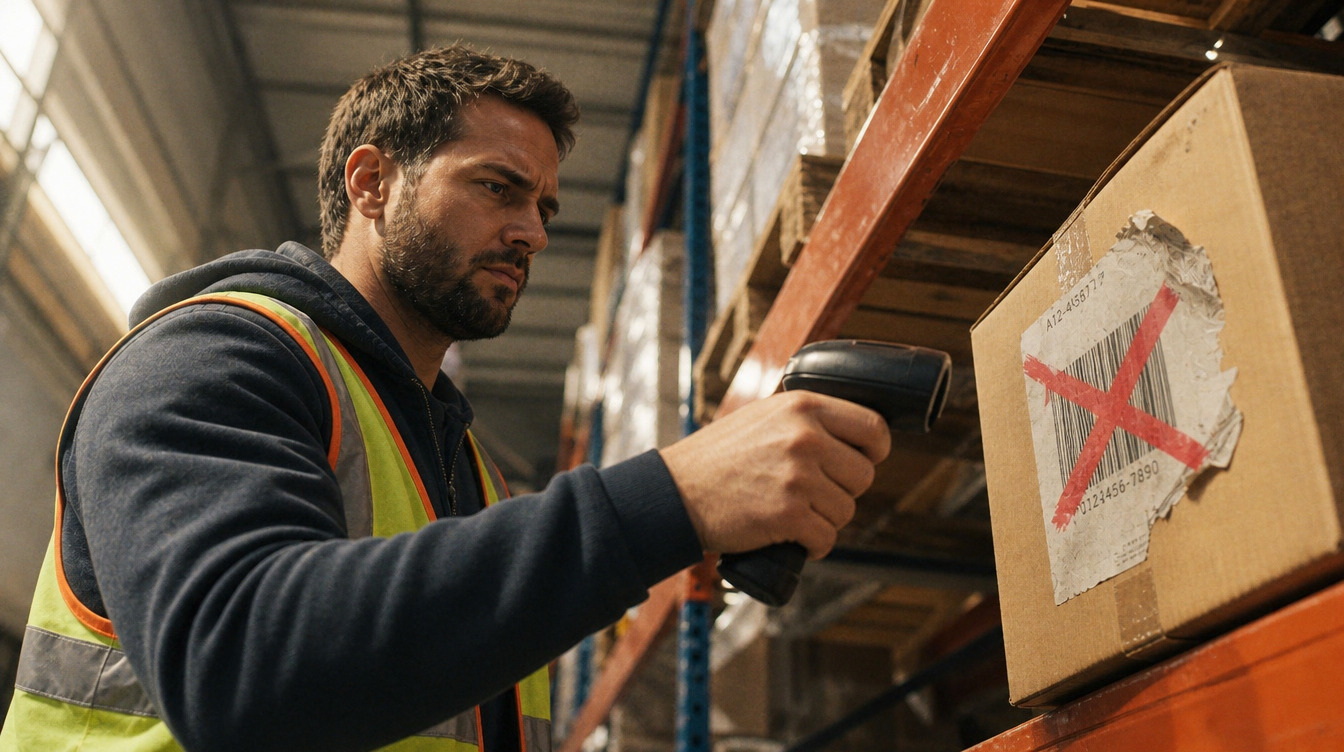
It’s audit week. A facilities lead walks the plant floor with a handheld scanner, and the older equipment keeps coming back blank. The asset labels are still there, but the barcodes have faded to gray and the edges have curled away from the housing. The machines are in plain sight. As far as the asset system knows, they are gone.
That gap is an unreadable asset label: a tag that can no longer be scanned or read with confidence. It usually comes down to fading, peeling, abrasion, chemical exposure, or a print method that was never right for the job. Asset labels may be some of the least expensive parts on a piece of equipment, yet they’re the thread that connects that equipment to your ERP, WMS, CMMS, and compliance records. When the thread breaks, the costs show up in three places: your books, your labor budget, and your supply chain.
Key Numbers
What failed labels add up to
10–30%
of assets on a typical register are no longer owned by the company, according to Gartner estimates.
1 in 300
characters keyed by hand contains an error, a common benchmark for manual data entry.
63–85%
inventory accuracy with manual entry or poorly maintained scanning, versus 95–99.9% for well-run barcode programs.
Asset labels are inexpensive. Unreadable ones are not.
Root Causes
Why asset labels stop scanning
In most cases, failed asset labels did exactly what they were built to do. They were simply built for a different environment, surface, or timeline than the one they ended up in. These six mismatches account for most failures.
Sun and weather
UV breaks down inks and face stocks over time. Outdoors, print on asset labels fades and the material cracks or chalks until the barcode no longer has enough contrast to read.
Chemical exposure
Cleaners, solvents, oils, and fuels attack the print and the adhesive at the same time, leaving smeared codes and edges that start to lift.
Abrasion and wear
Forklifts, pallets, gloved hands, and repeated washdowns scrape away the very bars and spaces a scanner depends on.
Wrong adhesive for the surface
Textured castings, tight curves, and low-energy plastics each need an adhesive formulated for them. Our guide to label adhesives breaks down the options.
Wrong print method
Direct thermal labels darken with heat and fade with light. For asset tags meant to last, thermal transfer printing with a resin ribbon holds up far longer.
Lifespan mismatch
Asset labels rated for two years on equipment expected to run for fifteen will fail long before the asset is retired.
The Hidden Costs
Three ways a failed label hits the bottom line

01
Ghost assets and inaccurate books
An asset you can’t verify is an asset you can’t account for. Over time, unverifiable equipment turns into a ghost asset: still on the fixed asset register and still depreciating, but impossible to confirm during an audit. Gartner estimates that 10 to 30 percent of the assets on a typical register are no longer owned by the company. Unreadable asset labels make the problem worse, because equipment sitting in plain view can still fail to match its record.
Buying replacement equipment you already have
Paying property tax and insurance on assets that exist only on paper
Depreciation schedules and audit findings built on bad data
Usable equipment sitting idle because no one can find it
02
Lost time on every failed scan
One failed scan costs a few seconds. Multiply those seconds by every shift, every handheld, and every working day, and the total becomes a real line item in the budget.
The workarounds carry their own risk. When a code won’t scan, someone types it in, and manual keying is commonly benchmarked at about one error for every 300 characters. Studies of warehouse operations put inventory accuracy at 63 to 85 percent where manual entry or poorly maintained scanning is the norm, compared with 95 to 99.9 percent for well-implemented barcode programs.

Run your own numbers
Annual cost = failed scans per day × seconds lost per scan ÷ 3,600 × loaded hourly labor rate × working days per year
Example: a distribution center logs 120 failed scans a day and loses 45 seconds on each one. At a $32 loaded hourly rate over 260 working days, that’s about 390 hours and $12,480 a year spent on rescans and workarounds. And that figure covers labor only.
Then comes relabeling. Replacing tags on rooftop units, in tight mechanical spaces, or near live electrical equipment takes planning, safety precautions, and skilled time. For larger facilities, BCS can handle the site survey, label production, and install as a single project. Our post on warehouse labels and services covers more ways to improve warehouse efficiency.
03
Blind spots across the supply chain
Traceability is only as strong as its weakest scan. When one label in the chain can’t be read, every partner downstream inherits the gap.
Shipments routed to the wrong place or pulled aside for manual sorting
Phantom inventory that causes stockouts in one place and overstock in another
Retailer chargebacks for labels that fail to scan at receiving
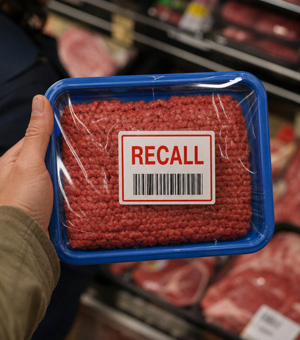
Broader, costlier recalls when lot or serial numbers are illegible
Food traceability is tightening. Under FSMA 204, covered food businesses must be able to hand the FDA their traceability records within 24 hours of a request. The compliance date is now July 20, 2028, and many large retailers are already writing these requirements into supplier contracts.
Prevention
Six steps to asset labels that outlast the asset
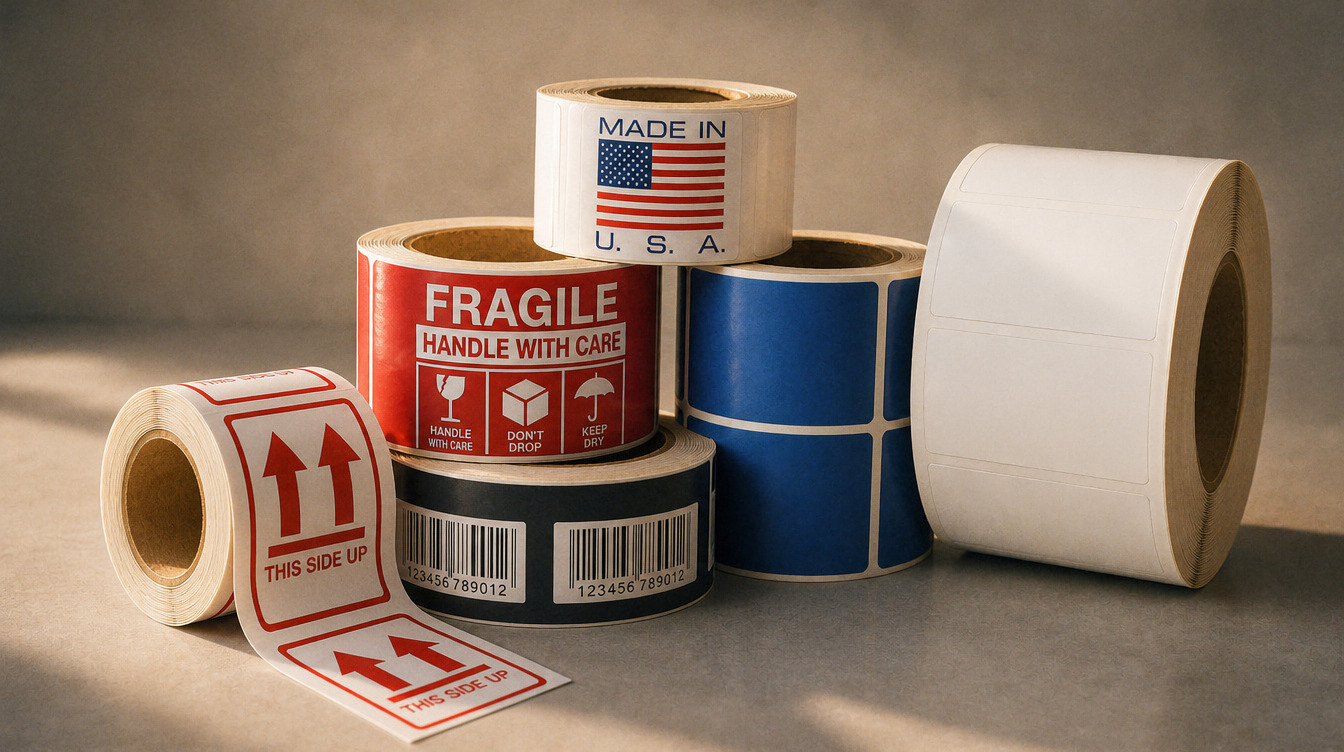
Durable asset labels usually cost more per piece and less over the life of the equipment. Here’s how to get there.
Define the environment
Before choosing asset labels, write down the surface, temperature range, UV and moisture exposure, chemicals, abrasion, and how many years the asset should stay in service.
Match the material to the job
Anodized aluminum for outdoor and long-life assets, polyester for most industrial settings, polyimide for high heat, and tamper-evident constructions for high-value equipment.
Choose a print method built to last
Thermal transfer with resin ribbon, photo-anodized metal, and laser etching all outlast direct thermal. Compare formulations in our thermal transfer ribbon guide.
Pick the right data carrier
A 1D barcode, a 2D code such as Data Matrix or QR, or RFID. The right choice depends on label size, read distance, and line of sight. See how RFID can be built into a printed label.
Pilot before you roll out
Apply samples in the real environment and verify print quality against ISO/IEC barcode standards. The BCS service bureau verifies printed and encoded labels before they ship.
Audit on a schedule
Track first-pass scan rates and replace asset labels as they degrade, before a slow trickle of failures becomes an audit problem.
Frequently Asked Questions
Most asset labels become unreadable because the label doesn’t match its environment. UV, chemicals, abrasion, temperature extremes, and the wrong adhesive for the surface are the usual culprits.
A ghost asset is equipment that appears on the fixed asset register but can’t be physically located or verified. Unreadable tags make ghost assets more likely because the equipment can’t be matched to its record.
At minimum, as long as the asset it identifies. For capital equipment, that often means ten years or more, so the material, adhesive, and print method should be specified for the full service life.
For outdoor and harsh environments, anodized aluminum and laser-etched metal labels are among the toughest options. Polyester and polyimide labels perform well in many indoor industrial settings.
Direct thermal works well for short-life labels such as shipping labels and receipts, but it fades with heat, light, and time. For asset tags, thermal transfer printing with a resin ribbon is the more durable choice.
Ready for asset labels that last as long as your equipment?
Talk with a BCS labeling specialist about your surfaces, environment, and service life. We’ll help you match the material, adhesive, and print method so your asset labels keep scanning year after year.
TALK TO OUR EXPERTS TODAY | CONTACT US | (908) 429-8574
Sources: Gartner ghost asset estimate, via Asset Panda; keying error rate and inventory accuracy ranges, via Advanced Automation; FSMA 204 compliance date, via Canadian Food Inspection Agency.